Source Professional Nail Sanding Bands for Gel Removal, Cuticle Care, and Polishing
Explore 30 listings for professional nail sanding bands designed for hard gel removal, cuticle cleaning, and acrylic nail polishing. Buyers can compare grit options, materials like diamond and alumina oxide, and customization support from verified suppliers in China.
Key considerations
Products List


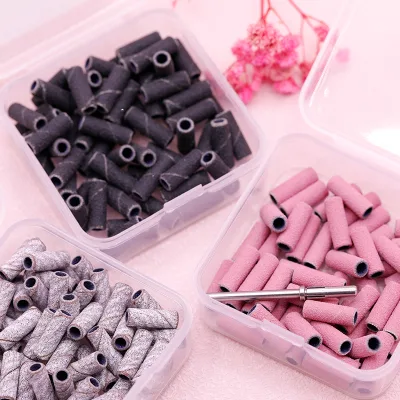
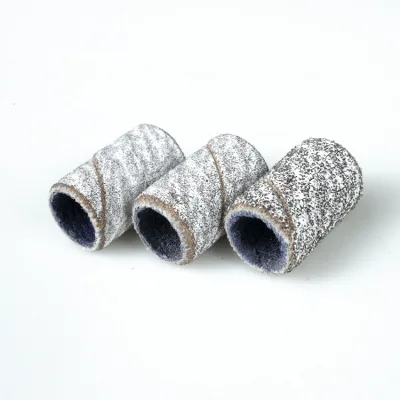
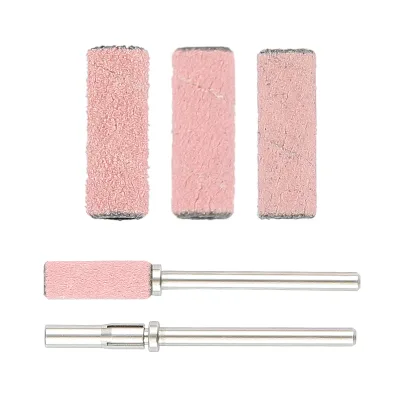
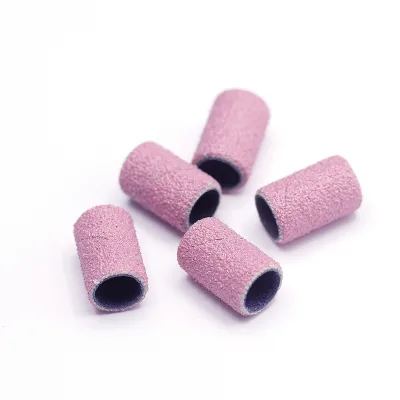


Comprehensive Sourcing Guide
Strategic Sourcing Guide for Professional Nail Sanding Bands
Understanding Product Variants and Technical Specifications
The market for professional nail sanding bands presents a diverse array of technical configurations, requiring buyers to distinguish between general abrasive tools and specialized nail care implements. Based on current product listings, the core keyword "professional nail sanding bands" encompasses several distinct categories defined by material composition, grit specifications, and physical dimensions. A primary distinction lies in the abrasive material itself. Some listings explicitly identify the material as "Diamond," indicating a high-durability option suitable for heavy-duty removal of hard gel or acrylics. Conversely, other entries specify "Alumina Oxide" or general "sanding paper," which are traditional abrasives often used for polishing and finer finishing tasks. The material choice directly influences the tool's lifespan and the specific type of nail enhancement it can effectively manage.
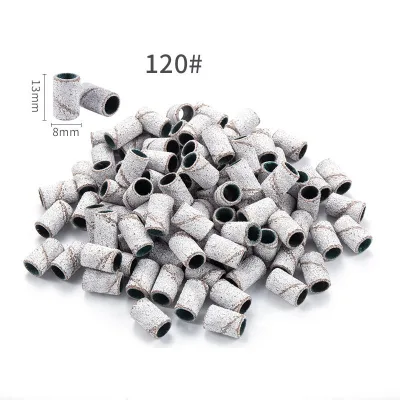
Physical dimensions are equally critical in procurement decisions. The observed product data reveals a wide spectrum of sizing options. Some units are described with a specific diameter of "3mm," often categorized as "small sanding bands" designed for precision work on cuticles or detailed nail art. Other listings reference a length of "6.35m," suggesting a continuous band format or a specific roll length that requires careful verification of the actual usable surface area. The shape is consistently noted as "Round," which is the standard geometry for rotary file machines used in nail salons. Furthermore, the single package size varies significantly, ranging from compact dimensions like "6.2X6.4X2 cm" for individual retail units to larger packages measuring "13X6X2 cm" for bulk sets. Buyers must align these physical attributes with the specifications of their existing rotary file machines to ensure compatibility.
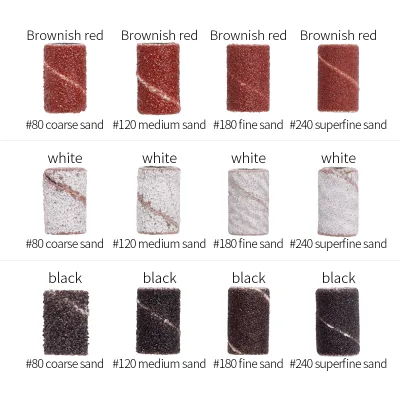
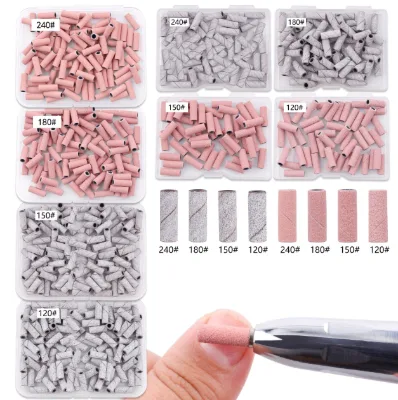
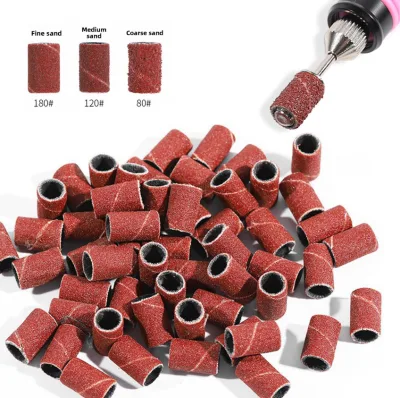
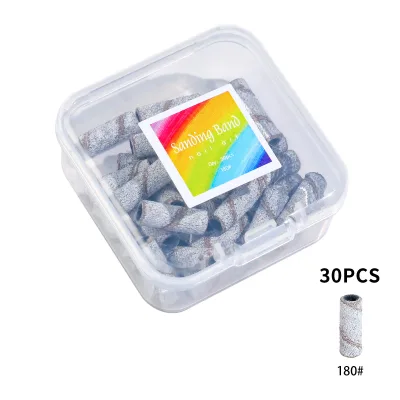
Grit selection represents another vital technical parameter. The available data indicates a range of grit levels, including specific numerical values such as "60/100/150," "80/100/150/180/240Grit," and letter-based designations like "C/M/F." Lower grit numbers (e.g., 60 or 80) generally provide aggressive material removal, ideal for the initial shaping of hard gel or acrylic tips. Higher grit numbers (e.g., 180 or 240) offer a smoother finish, suitable for polishing and callus removal. The availability of "Custom" grit options allows for specialized procurement, but buyers must verify the exact micron size associated with these custom requests to ensure they meet the desired performance standards.
Compliance, Certification, and Safety Standards
When sourcing professional nail sanding bands, compliance and safety verification are paramount, particularly given the direct contact these tools have with human skin and nail beds. While the provided product data does not list specific certification numbers or third-party test results, buyers must treat the absence of explicit certification claims as a requirement for further due diligence. In the B2B context, safety standards for beauty and personal care tools often involve regulations regarding material toxicity, dust generation, and mechanical integrity.
Buyers should verify that the "Diamond" or "Alumina Oxide" materials used in the bands are free from harmful heavy metals or toxic binders. The origin of the product, noted as "Guangdong, China" or "Shanghai, China" in various listings, suggests a concentration of manufacturing in these regions. While these are major manufacturing hubs, the specific compliance status of the factory must be confirmed. Procurement teams should request documentation proving that the materials comply with relevant international safety standards, such as those governing cosmetic tools or general industrial abrasives.
Additionally, the "OEM" and "ODM" capabilities mentioned in the product attributes imply that the supplier can customize the product. This customization capability introduces a layer of complexity regarding compliance. If a buyer requests a custom logo or specific packaging, the supplier must ensure that the inks, adhesives, and packaging materials used are also compliant with safety regulations. The "Warranty" field listing "Other" in some entries indicates that warranty terms are not standardized across the market. Buyers should not assume a standard warranty period but must negotiate clear terms regarding product failure, material defects, and replacement policies in the purchase agreement.
Cost Drivers and Pricing Structures
The pricing structure for professional nail sanding bands is influenced by several dynamic factors, including material quality, customization requirements, and order volume. The observed price range in the market spans from $0.01 to $15 USD per unit. This wide variance reflects the difference between basic sanding paper bands and premium diamond-coated options. The lower end of the price spectrum likely corresponds to standard sanding paper bands with basic grits, while the higher end may include specialized diamond bands or sets with custom packaging and branding.
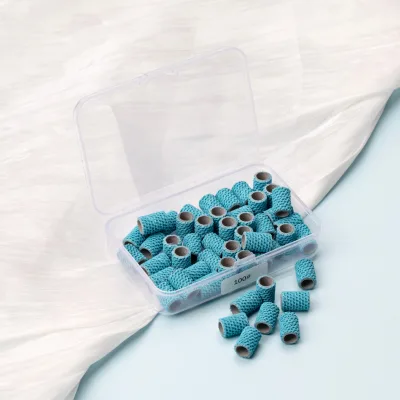
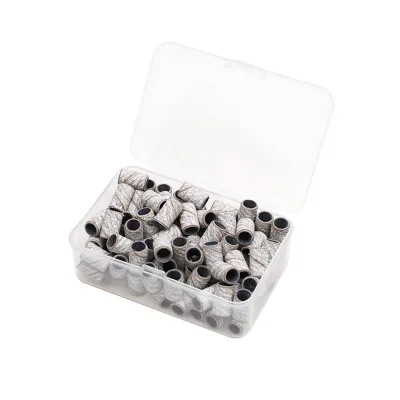
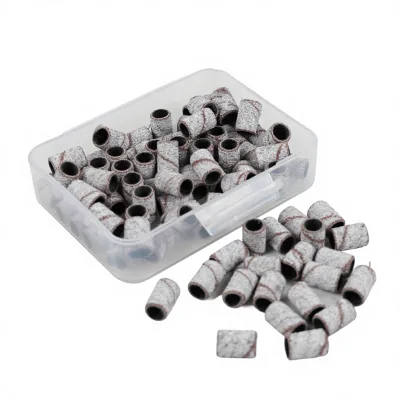
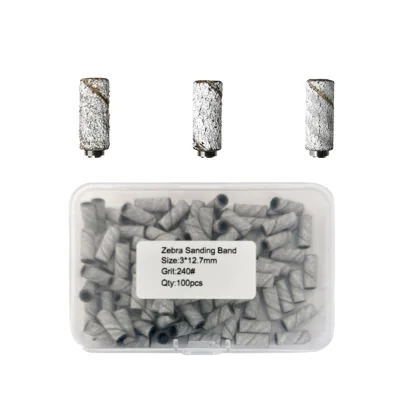
Minimum Order Quantity (MOQ) is a significant cost driver. The data shows an MOQ range from 1 piece to 10,000 pieces. Some suppliers offer an MOQ of just 1 piece, which is advantageous for small salons or for sampling purposes. However, these low-MOQ options often carry a higher unit price. Conversely, suppliers with an MOQ of 200, 500, or even 10,000 pieces typically offer more competitive per-unit pricing. The "Selling Units" attribute, listed as "Single item" in some cases, suggests that some suppliers sell individual bands, while others sell in sets or boxes (e.g., "100psc in one box").
Customization is another major factor affecting cost. The "Logo Customized" and "OEM" attributes indicate that adding a brand logo or altering the product specifications will increase the unit cost. The "Customized Size" and "Customer Require" color options further suggest that bespoke orders will incur additional setup fees or higher material costs. Buyers must balance the need for branding and specific technical requirements against the budget constraints. The "Single gross weight" also varies, from 0.041 kg to 2.400 kg, which impacts shipping costs. Bulk orders with higher weight may benefit from economies of scale in logistics, but the total landed cost must be calculated carefully.
Typical Applications and Usage Scenarios
Professional nail sanding bands are designed for a variety of applications within the nail care industry, ranging from basic maintenance to advanced nail art techniques. The primary usage scenarios identified in the product data include "Hard Gel Remover and Polishing," "Callus Remover and Polishing," and "Acrylic Nail Tips Grinding." These applications dictate the choice of grit and material. For instance, the removal of hard gel and acrylic tips requires a robust abrasive, such as the "Diamond" material or a coarse grit like 60 or 80, to efficiently break down the tough polymer without damaging the natural nail underneath.
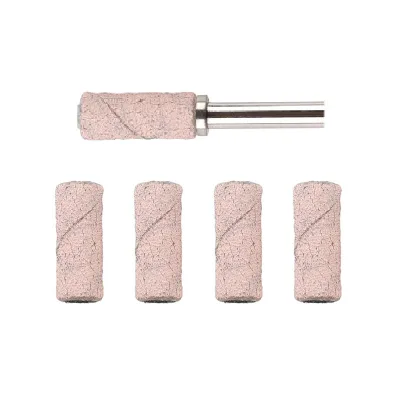
The "DIY/Grinding head" usage suggests that these bands are also suitable for do-it-yourself enthusiasts who may require a more versatile tool for home nail care. The "Round" shape is specifically engineered to fit into rotary file machines, allowing for precise control during the grinding process. This design feature is essential for tasks like "clean cuticle" work, where precision is necessary to avoid injury. The "Feature" attribute highlighting "clean cuticle, acrylic nail tips grinding" confirms the dual utility of these tools for both structural nail work and aesthetic finishing.
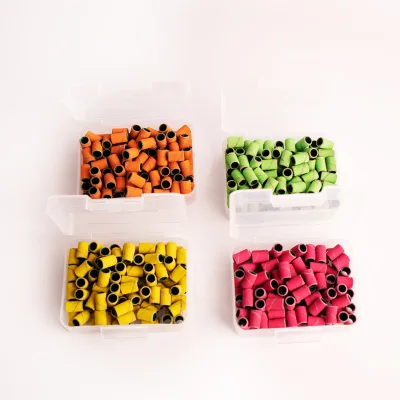
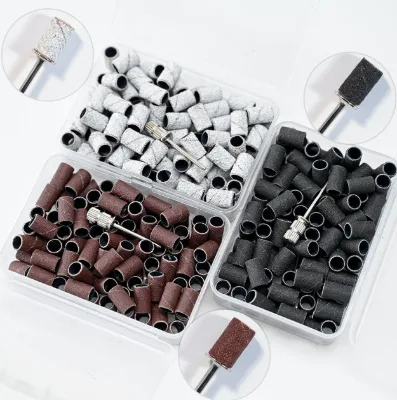
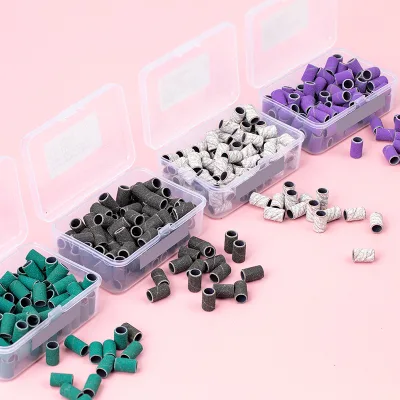
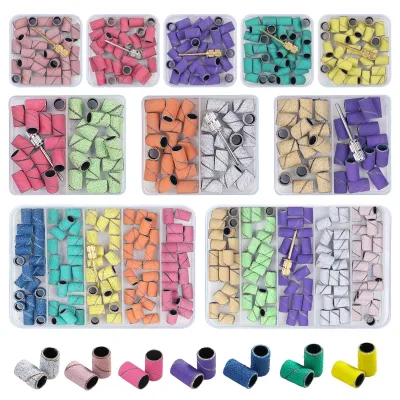
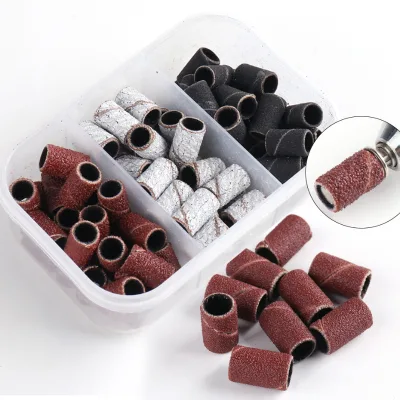
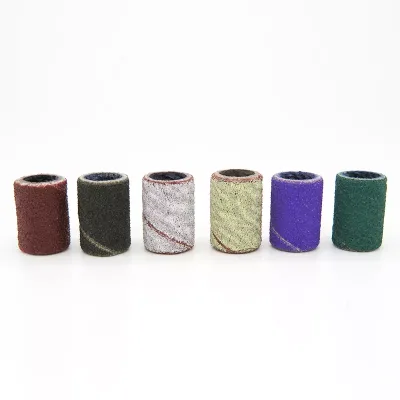
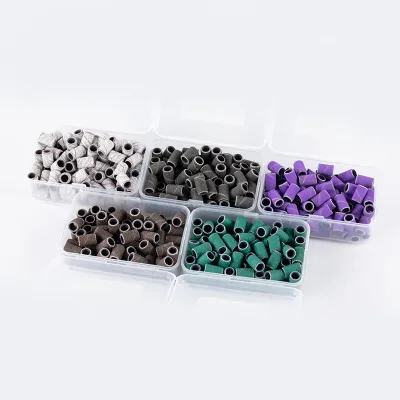
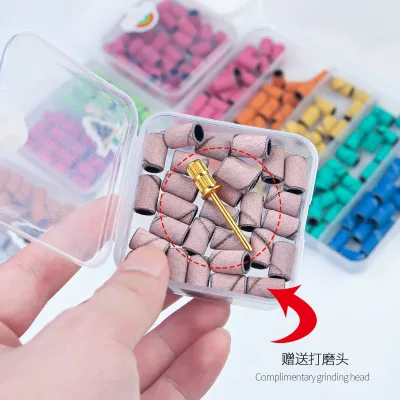
Furthermore, the availability of "Assorted Colors" (e.g., "50pcs Assorted Colors," "100pcs Assorted Colors") and specific color options like "Blue," "Black," "Red," "Yellow," and "Purple" indicates that color coding is often used to differentiate grit levels or to provide a visually appealing product for retail sale. This color differentiation helps nail technicians quickly identify the correct tool for a specific stage of the nail enhancement process, improving workflow efficiency. The "Packing" options, ranging from "Opp Bag" to "Box/Bag/Case," also reflect the intended usage environment, with durable packaging preferred for professional salon use and retail-friendly packaging for consumer sales.
Supplier Evaluation and Selection Criteria
Selecting the right supplier for professional nail sanding bands requires a rigorous evaluation process that goes beyond price comparison. The "Brand Name" field in the data shows entries like "Golen" and "chiyan," indicating that both established brands and generic manufacturers exist in the market. Buyers should prioritize suppliers who demonstrate transparency regarding their brand identity and manufacturing capabilities. The presence of "OEM/ODM: Yes.We Provide OEM ODM" suggests that many suppliers are willing to collaborate on product development, which is a positive indicator of flexibility and service orientation.
Geographic location is another critical factor. The "Place of Origin" is listed as "Guangdong, China" or "Shanghai, China." Both regions are known for their manufacturing infrastructure, but buyers should verify the specific factory's capacity and reputation. A supplier located in a region with a strong supply chain for abrasive materials may offer better quality control and faster lead times. The "Sample: Aavilable" attribute (noting the likely typo for "Available") is a crucial indicator of supplier confidence. A supplier willing to provide samples allows buyers to physically test the product's quality, grit consistency, and durability before committing to a large order.
The "Logo" and "Customized Support" attributes highlight the importance of branding capabilities. Suppliers that accept custom logos and offer OEM support are better suited for buyers looking to build a private label business. However, buyers must verify the supplier's ability to maintain quality consistency across customized batches. The "Warranty: Other" entry suggests that warranty terms are negotiable, and buyers should seek clear, written agreements regarding product defects and returns. Finally, the "Single gross weight" and "Single package size" data should be used to evaluate the supplier's packaging efficiency and logistics capabilities, ensuring that the product arrives in good condition and at a reasonable shipping cost.
Quality Control and Long-Term Procurement Considerations
Ensuring consistent quality in professional nail sanding bands requires a robust quality control (QC) strategy. Given the variation in "Grit" (e.g., 60/100/150 vs. 80/100/150/180/240Grit) and "Material" (Diamond vs. Alumina Oxide), buyers must establish clear acceptance criteria. QC checks should include verifying the grit uniformity, ensuring the abrasive material is securely bonded to the band, and confirming that the band fits the rotary file machine without wobbling or slipping. The "Single gross weight" variance (0.041 kg to 2.400 kg) also serves as a potential indicator of quality; significant deviations from the expected weight could suggest packaging errors or material inconsistencies.
Long-term procurement considerations involve building a sustainable supply chain. The "MOQ" range of 1 to 10,000 pieces offers flexibility, but buyers should aim to establish a relationship with a supplier that can scale with their business growth. A supplier with a high MOQ capacity (e.g., 10,000 pieces) may offer better pricing for large-scale operations, while a low-MOQ supplier is ideal for testing new markets. The "Customized Size" and "Customer Require" attributes suggest that long-term partnerships may involve ongoing product development. Buyers should look for suppliers who are responsive to feedback and willing to iterate on product designs to meet evolving market demands.
Additionally, the "Packing" methods (Opp Bag, Box, Case) should be evaluated for their ability to protect the product during transit and storage. Poor packaging can lead to damaged bands, resulting in customer dissatisfaction and returns. Buyers should consider the environmental impact of the packaging materials and explore options for sustainable packaging if it aligns with their brand values. Finally, the "Warranty" terms should be reviewed annually to ensure they remain competitive and reflective of the product's performance. By maintaining a proactive approach to quality control and supplier management, buyers can secure a reliable supply of professional nail sanding bands that meet the high standards of the nail care industry.
Comparative Analysis of Product Attributes
To facilitate informed decision-making, the following table summarizes key product attributes observed in the market for professional nail sanding bands. This comparison highlights the diversity in specifications and helps buyers identify the specific product features that align with their procurement needs.
| Attribute | Observation 1 | Observation 2 | Observation 3 | Observation 4 |
|---|---|---|---|---|
| Material | Diamond | Alumina Oxide | Sanding Paper | Stainless (Band Base) |
| Grit Range | 60/100/150 | 80/100/150/180/240 | C/M/F | Custom |
| Size/Dimension | 3mm small | 6.35m/3mm | 10X10X10 cm (Pack) | 6.2X6.4X2 cm (Pack) |
| Usage | Hard Gel Remover | Callus Remover | DIY/Grinding | Acrylic Tips Grinding |
| MOQ | 1 PCS | 200 pcs | 500 sets | 10000 (Max Observed) |
| Color Options | Blue, Brown, Red | Black, Purple | Assorted Colors | Customer Require |
| Brand | Golen | chiyan | Custom Logo | Generic |
| Origin | Guangdong, China | Shanghai, China | Guangdong, China | Shanghai, China |
| Weight (Gross) | 2.400 kg | 0.041 kg | 1.0 kg | 0.33g/pcs |
| Packing | Opp Bag | Box/Bag/Case | 100psc in one box | Single item |
This table underscores the necessity for buyers to define their requirements clearly before engaging with suppliers. The variation in materials, grits, and packaging indicates that a "one-size-fits-all" approach is ineffective in this market. Buyers must prioritize the specific attributes that are critical to their operational needs, such as the durability of diamond bands for heavy-duty removal or the precision of specific grits for delicate polishing tasks. By leveraging this comparative data, procurement teams can streamline their sourcing process and select the most suitable products for their professional nail care operations.
FAQs
What materials are used for professional nail sanding bands?
Professional nail sanding bands are commonly made from diamond, alumina oxide, or sanding paper. Diamond bands offer high durability for hard gel removal, while alumina oxide and sanding paper are suitable for polishing and finer finishing tasks depending on the specific application needs.
Which grit levels are available for these sanding bands?
Available grit levels include specific numbers like 60, 80, 100, 150, 180, and 240, as well as letter designations such as C, M, and F. Lower grits like 60 or 80 provide aggressive removal for acrylics, while higher grits like 180 or 240 offer smoother polishing finishes.
Can I request custom sizes and logos for these bands?
Yes, suppliers offer customized sizes and accept custom logos for branding. The product specifications list customized size options and logo customization, allowing buyers to tailor the physical dimensions and visual identity to meet specific salon or retail requirements.
How does the minimum order quantity vary for these products?
Minimum order quantities range from 1 piece to 10,000 pieces depending on the supplier. Some vendors allow sampling with an MOQ of just one piece, while others require bulk orders of 200, 500, or higher to qualify for competitive per-unit pricing.
Where are these professional nail sanding bands manufactured?
These bands are primarily manufactured in Guangdong and Shanghai, China. The product data indicates these specific locations as the places of origin for various listings, reflecting the concentration of manufacturing infrastructure in these regions.
What packaging options are available for bulk orders?
Packaging options include OPP bags, boxes, cases, and assorted color sets. Listings show variations such as single items in OPP bags, sets of 100 pieces in boxes, and bulk packaging designed for both professional salon use and retail distribution.